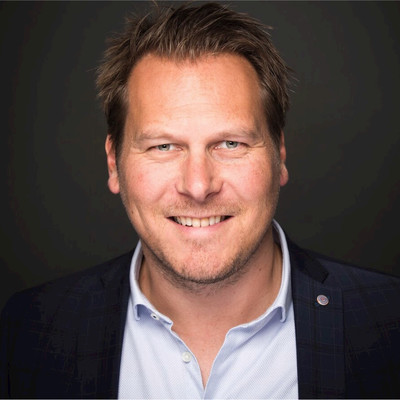
At our ITIL event in the Netherlands, we interviewed Dave van Herpen, one of the keynote speakers. He explains that true Agility goes beyond frameworks. It requires behavioural change, leadership commitment, and integration of service management. Check out our interview with Dave van Herpen.
You’ve worked across Agile, DevOps, and organisational change. Are you actually involved with ITIL or are you maybe interested in it?
I see the whole service management, support and operations domain as crucial to include in any organisational change initiative. Whether you only talk about an Agile transformation, focusing on (product) development teams, or whether you talk about an all-including (Biz)DevOps change, in all cases a narrow focus on (software) development alone would lead to suboptimal results and lack end-to-end flow. Including the service, support and operations dimensions in all these initiatives is needed to ensure value delivery throughout the product/service lifecycle and to deliver/exceed customer expectations.
I still see ITIL as the #1 reference for any (IT) service management, support and operations responsibilities, helping with essential practices, collaboration models and common taxonomies.
Earlier you shared ‘5 Ways to Screw Up Your Service Agility’. Which of these do you see happening most often, and why do organisations fall into that trap?
Of all 5 ways, I would say that #1 is the most common one. It highlights the natural behaviour in many organisations, where labeled themes and frameworks (Agile, DevOps, SAFe, AI) appeal to the human tendency to focus on those labels, instead of the underlying (organisational or transformational) objectives.
What is it that we actually want to achieve with this movement/change, not just checking the box when everyone has done a fancy training. The effect many organisations are now facing due to this, is change fatigue in the teams. They just see another new label coming in from behind, and all they can do is sigh and moan about yet another change, without truly understanding the connection with the strategic objectives these changes should help achieve.
You emphasised that ‘service Agility is all about behaviour.’ What are some of the most important behavioural shifts you’ve seen make or break Agile transformations?
It is most important that all people in the organisation understand that they need to change their own behaviours, in order to achieve an organisation-wide change.
Especially managers all too often look around, see other people changing their behaviours, and pretending they are changing as well. Or plenty of examples of fake change, where role names are changed (e.g. from project manager to epic owner), but old behaviours still prevail, leading to change theatre.
Behavioural changes that actually make a transformation successful, would include small, incremental changes in teams, where POs (product owners) show vulnerability while trying to understand the relevance of technical debt reduction, or when the team makes small steps towards truly engaging with users, really understanding their desired value and actual user experience.
You’ve implemented Agile at scale in several organisations. In your experience, what is the biggest misconception leaders still have about what Agile truly means, and how do you address that in your work?
Leaders still tend to think Agile is about implementing a framework, a hierarchy of new and fancy roles, or still think this is mostly affecting the development teams.
Leaders need to understand they also have a fundamental role in achieving Enterprise Agility. They need to help change the organisation design and structure, they need to help get rid of system-wide impediments, they need to understand their role in leading-by-example, they need to understand their role in making way (creating room & budget) for serious improvements, even though this may not rhyme with their traditional beliefs of command and control.
As long as they keep showing old behaviours and steer on the wrong indicators, the frustration in the organisation will grow and grow.
In the Netherlands, there’s a growing perception that ITIL is outdated or no longer relevant. How would you respond to that perception, and what do people often misunderstand about what ITIL 4 actually brings to the table?
ITIL still suffers from the fact that it is linked to old beliefs around stability, grumpy system administrators and process-driven behaviours.
New movements (take DevOps as an example) point to frameworks like ITIL, saying it does not comply with modern engineering practices, but at the same time neglect the metamorphosis that the framework has gone through in the past years.
They consistently neglect the valuable practices and learnings from the framework, trying to come up with more alternatives. The ITIL practices, when applied in the right way in the right context, provide a lot of value in every professional organisation. It is still an important part of the enterprise puzzle to create an effective operating model for all products and services, processes and organisational aspects.
QRP International is an Accredited Training Organisation (ATO) for ITIL. Would you like to know more about ITIL? Visit our ITIL courses page.
 Skip to content